In 1965, the BBC launched a programme called Tomorrow’s World. Along with millions of others, my dad and I would tune in every week throughout the 90s to watch presenters unveil the future – from the first home computers to early mobile phones and compact discs.
For nearly forty years, it captured genuine excitement about technology. A sense of wonder that tomorrow could be better, smarter and more connected.
But somewhere along the way, that feeling faded. Tomorrow's world was cancelled. Apple’s eagerly anticipated keynotes are forgotten. Hardware upgrades are mundane.
we’ve reached a stage where technical brilliance alone doesn’t move people. A product can be extraordinary on paper, packed with the latest tech and features, yet it still feel empty.
Great design doesn't need to be clever. It just needs to be felt
We can learn from this. Great design doesn’t need to be clever; it needs to be felt. It stirs something human – joy, calm, curiosity and even nostalgia.
This is why sometimes the simplest ideas have the biggest impact, because they leave enough room for the imagination to kick in. The more of the user’s attention you consume, the less meaning they’re able to create for themselves. Maybe this is why VR technology never really took off; because it consumes too much cognitive function for our imagination to remain in play.
When creating digital experiences I’ve formulated this into a principle I call the imagination threshold: At any moment, digital interactive experiences should lead with one sense and let the rest remain passive.
I put this principle to the test, with a heartwarming little microsite during my time at Wanderlust , making the locals of Southern USA, authentic ambassadors for its infamous hospitality. Instead of overloading the reader with video, we intentionally told stories using audio, allowing the user to continue reading and exploring photographs at their own pace.
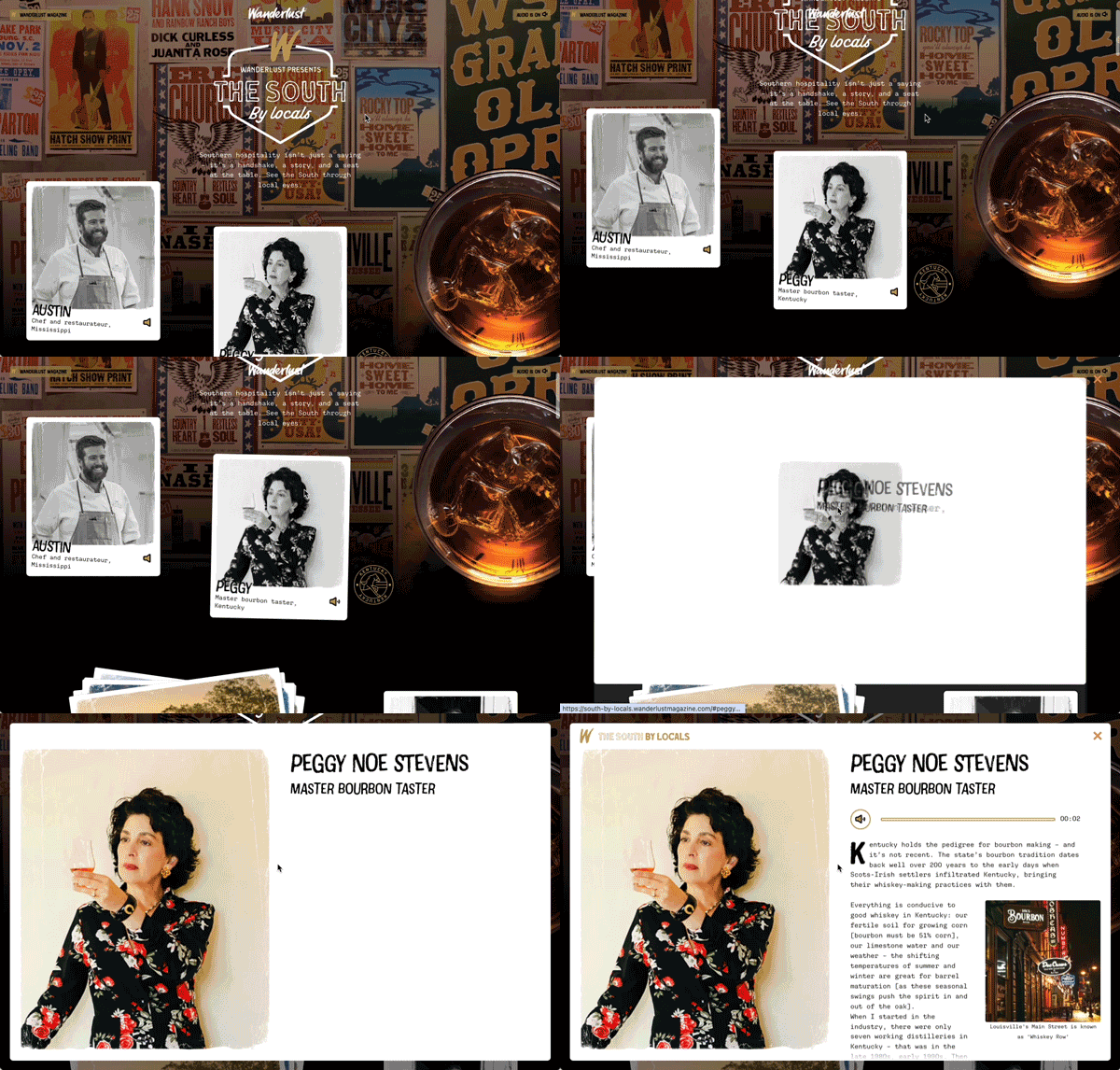
I hope you like it.
Enjoy!